Dubai’s sun doesn’t do things by halves — cabin temperatures can soar past 60°C in a parked car, and UV exposure is a year-round concern. That’s why window tinting isn’t just cosmetic here; it’s practically essential car care. Among the many film options available, two names come up again and again at premium installers: 3M Crystalline and 3M Ceramic. Both are excellent, but they’re built for slightly different priorities. Here’s a straightforward breakdown to help you choose the right one for your vehicle.
What Is 3M Crystalline Tint?
3M Crystalline is a multilayer optical film — built from over 200 microscopically thin layers that filter out infrared heat without relying on dark pigment or metal to do the work. It rejects up to 64% of total solar energy and up to 98% of infrared light, with 99.9% UV protection. Because it doesn’t need darkness to block heat, Crystalline can deliver serious performance even in lighter, near-invisible shades — which is exactly why it’s popular for windshields and front windows in the UAE, where tint darkness on those areas is tightly regulated. gilroyblackout
What Is 3M Ceramic (Ceramic IR) Tint?
3M Ceramic IR uses nano-ceramic particle technology to block heat and UV rays. It offers up to 63% total solar energy rejection and 99.9% UV block, at a more accessible price point than Crystalline. It’s a strong all-rounder — great heat rejection, no interference with GPS, Salik, or phone signals, and it holds up well against fading and discoloration over time, which matters a lot given Dubai’s intense, near-constant sun exposure. gilroyblackout
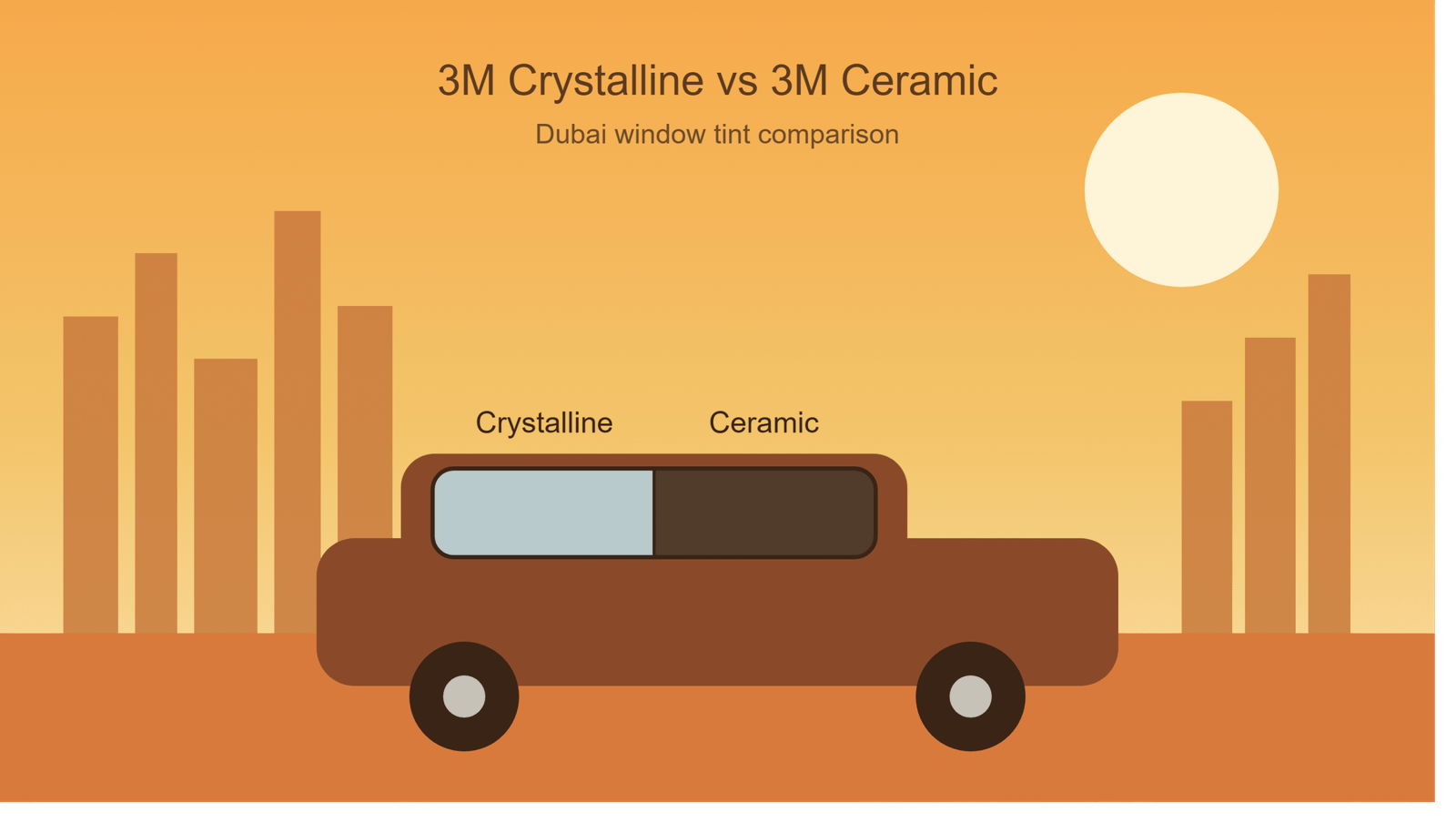
3M Crystalline vs 3M Ceramic: Quick Comparison
| Feature | 3M Crystalline | 3M Ceramic (Ceramic IR) |
|---|---|---|
| Heat rejection | Higher — up to 98% infrared rejection | Slightly lower — very strong, but marginally behind Crystalline |
| UV protection | 99.9% | 99.9% |
| Optical clarity | Exceptional — virtually no color shift, ideal for windshields | Good — visibly clear, slight edge to Crystalline in the lightest shades |
| Darkness options | Fewer, lighter shades — built to perform without going dark | Wider range, including darker shades |
| Signal interference | None | None |
| Price | Premium | Mid-range, better value |
| Best for | Windshields, front windows, drivers who want max heat rejection without dark tint | Full-car tinting where a darker look and strong heat rejection are both wanted |
Which One Should You Choose?
Go with 3M Crystalline if:
- You want maximum heat rejection on your windshield or front windows without breaking UAE tint-darkness rules
- Optical clarity is a priority — no color distortion, no hazy look
- You’re tinting a luxury or performance vehicle and want the best available technology
Go with 3M Ceramic if:
- You want a darker overall look across the vehicle along with strong heat and UV rejection
- You’re working with a tighter budget but still want ceramic-grade performance
- You want an easier balance of comfort, privacy, and value for daily driving in Dubai traffic
A Note on Dubai’s Tint Laws
Whichever film you pick, it needs to stay compliant. UAE traffic law caps tint at 50% VLT on side and rear windows, and windshield tinting is restricted to a narrow strip at the top. This is one more reason Crystalline is popular for windshields specifically — its light shades still deliver strong heat rejection while staying within legal limits.
Get the Right Tint, Professionally Installed
Both 3M Crystalline and 3M Ceramic are genuine, high-performance films — the “better” choice really comes down to how dark you want your car and how much heat rejection you’re prioritizing on which windows. At Samrat Car Care, our team can walk you through both options, recommend the right shade for each window based on Dubai’s regulations, and install it correctly so you get the full performance and warranty these films are known for.
Book a consultation with Samrat Car Care today and drive cooler, safer, and fully compliant this summer.